- When Your Home Starts Feeling Too Small
- Key Takeaways
- Why More Homeowners Are Choosing Additions Instead of Moving
- The Types of Additions That Make the Biggest Difference
- Will the Addition Look Like It Belongs?
- What to Expect During the Process
- Is a Room Addition Right for You?
- Conclusion: Build the Space You Need Without Leaving Home
- Frequently Asked Questions About Room Additions in the Metro East
- 1. Is it cheaper to add onto my home or move?
- 2. How long does a room addition take?
- 3. Will the addition look like it was part of the original house?
- 4. Do I need permits for a home addition?
- 5. Can I live in my home during the addition?
- 6. What types of additions are most popular?
- 7. How much does a room addition cost?
- 8. Will a room addition increase my home’s value?
- 9. Do contractors use subcontractors for additions?
- 10. How do I know if my home can support an addition?
- 11. Can I choose my own materials or do part of the work myself?
- 12. What is the first step to getting started?
- External Links:
- 1. “Additions 101: Designing a Seamless Home Addition” — Fine Homebuilding
- 2. “Is It Better to Move or Improve Your Current Home?” — Harvard Joint Center for Housing Studies
- 3. “Planning a Home Addition: A Guide to Expansion Projects” — NAHB (National Association of Home Builders)
When Your Home Starts Feeling Too Small
Most families reach this point at some time.
The house that once felt just right starts to feel a little too small.
It usually doesn’t happen all at once. Instead, it builds over time.
At first, it may just feel crowded in the evenings. Then the kids get older and want more privacy. The living room starts to feel tight. The kitchen becomes harder to use when everyone is home. If you work from home, finding a quiet place can be a challenge.
Little by little, your home stops working the way it used to.
That’s when the question comes up:
“Do we need to move?”
At first, moving seems like the simple answer. A bigger house should solve the problem.
But for many homeowners in the Metro East—especially in Waterloo, Columbia, Millstadt, and Belleville—the issue is not the location. It is the space and layout inside the home.
You may already like where you live. Your kids may be in a school that fits them well. You may be close to work, family, and friends. Your daily routine is built around this area.
So instead of asking, “Where should we move?” a better question is:
“How can we make this home work better for us?”
That’s where a room addition can make a real difference.
Key Takeaways
- You don’t have to move to get more space.
Many homeowners can solve space problems by adding onto their current home instead of starting over somewhere new. - Moving often comes with hidden costs and stress.
Higher mortgage rates, closing costs, and major life changes can make moving less appealing than it first seems. - Room additions let you improve how your home works.
Instead of settling for another home, you can design space that fits your family’s needs. - The best additions solve everyday problems.
Popular options include master suites, larger kitchens, family rooms, and home offices. - A well-designed addition should blend in with your home.
When done correctly, it will look and feel like it was always part of the house. - Planning and communication matter.
A clear process—from design to construction—helps the project run smoothly and reduces stress. - Additions are a long-term solution.
They improve daily life now and make your home more useful for years to come. - Staying in your current location is a major advantage.
You keep your neighborhood, schools, and routines while upgrading your space.
Why More Homeowners Are Choosing Additions Instead of Moving
More families are choosing to stay in their homes and improve them instead of moving. When you take a closer look, the reasons are clear.
Moving Can Cost More Than You Expect
Moving is more than just buying a different house.
There are the basic costs:
- Real estate agent fees
- Closing costs
- Moving expenses
But there are also long-term costs that matter just as much.
Many homeowners have lower interest rates on their current homes. Moving often means taking on a higher rate, which can increase your monthly payment.
Then there is the stress that comes with starting over.
You may need to adjust to a new commute. Your kids may need to change schools. Even simple routines—like grocery shopping or getting to activities—can take time to rebuild.
For example, a family in Waterloo may love their neighborhood, yard, and neighbors. Their only problem may be space. Moving would fix that—but it would also mean giving up things they already enjoy.
Finding the Right Home Is Not Easy
Even if you are ready to move, finding the right home can be frustrating.
You may find a house with more space, but:
- The layout does not work well
- The kitchen needs updates
- The bathrooms feel outdated
- The location is not as convenient
Most buyers end up making trade-offs.
They may get more space but lose convenience. Or they may like the location but take on a home that needs work.
Additions Let You Stay and Improve
A room addition offers a different path.
Instead of trying to find a better house, you can improve the one you already have.
You can build space based on how your family lives:
- Where you need more room
- What areas feel crowded
- What would make daily life easier
At the same time, you keep everything you already like about your home and location.
The Types of Additions That Make the Biggest Difference
The best additions are not just about adding space. They are about making your home easier and more comfortable to live in.
Master Suite Additions
In many homes, the main bedroom is small and simple.
It may not have enough space, storage, or privacy.
A master suite addition can change that.
It gives you:
- A larger bedroom
- A walk-in closet
- A private bathroom
This creates a space where you can relax and step away from the busy parts of the home.
Kitchen Expansions
The kitchen is one of the most used spaces in any home.
But many kitchens were not built for how families live today.
They can feel crowded, closed off, and short on storage.
An addition allows you to open up the space and improve how it works.
You can add:
- More counter space
- A large island
- More cabinets
- Better flow into nearby rooms
Many homeowners also take this time to update other areas. Pairing an addition with bathroom remodeling in Waterloo and the Metro East can help the entire home feel more complete.
Family Room Additions
As families grow, shared space becomes more important.
A family room addition gives everyone more room to spend time together without feeling crowded.
This space can be used for:
- Watching movies
- Playing games
- Hosting friends and family
It also helps take pressure off smaller rooms in the home.
Some families extend this space outdoors as well. Adding covered patios and outdoor living spaces in the Metro East creates more room to relax and enjoy time together.
Home Offices
Working from home has become more common.
Trying to work in shared spaces can be frustrating and distracting.
A home office gives you a space that supports focus and privacy.
It can also serve more than one purpose, such as a guest room when needed.
Spaces That Serve More Than One Purpose
Some of the most useful additions are designed to handle more than one need.
For example:
- A kitchen that connects to a larger living area
- A laundry room with added storage
- An office that doubles as a guest room
Planning the space this way helps make sure it stays useful over time.
Working with an experienced home addition contractor in the Metro East can help you plan these details the right way from the start.
Will the Addition Look Like It Belongs?
This is one of the first concerns homeowners have.
No one wants an addition that looks out of place.
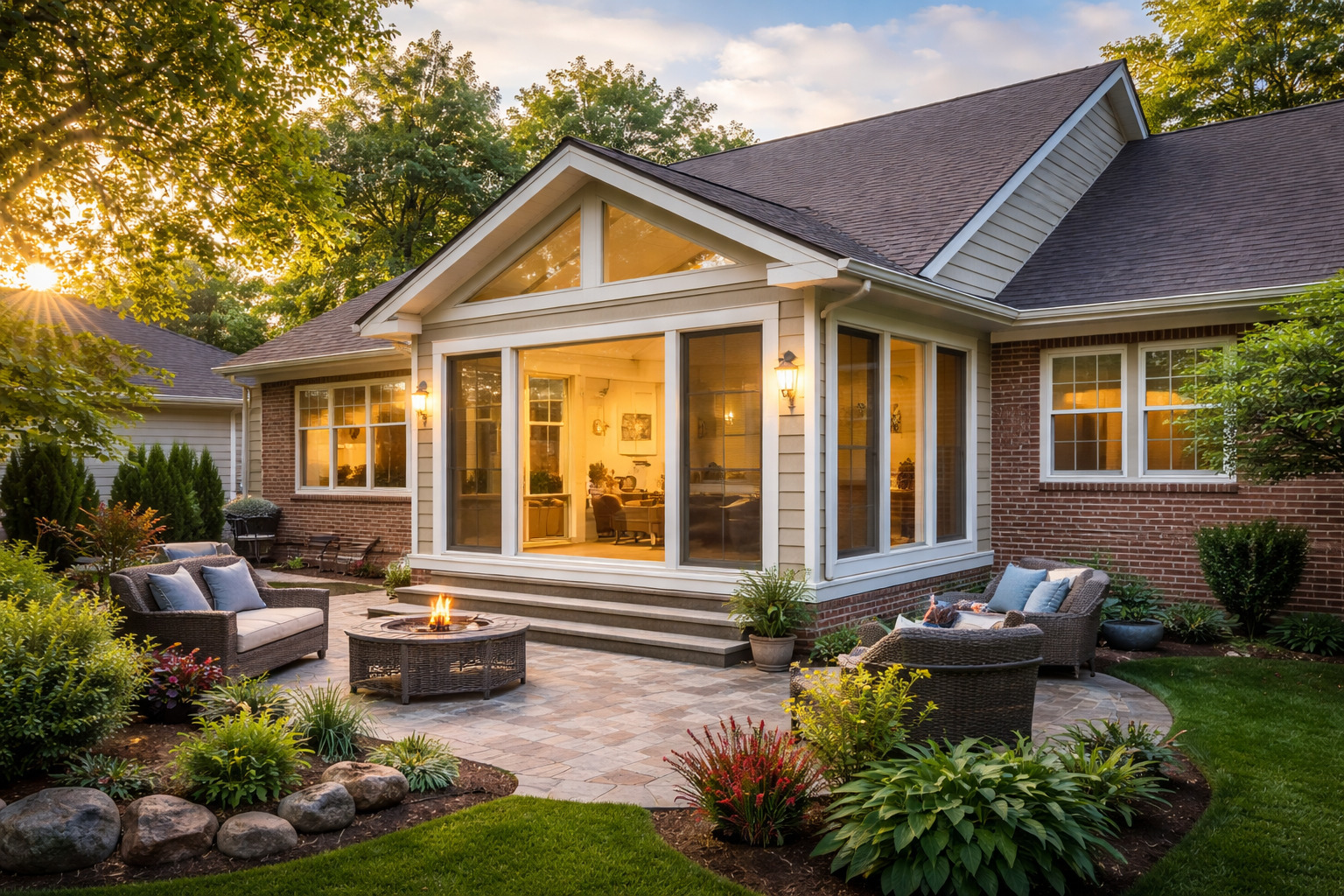
When done correctly, the new space should blend in with the rest of the home.
From the outside, that means matching:
- Rooflines
- Materials
- Window styles
Inside, the layout should feel smooth and natural.
Rooms should connect in a way that makes sense. Finishes should match so the home feels complete.
There is also important work behind the walls. The new structure must connect properly to the existing home so it is safe and built to last.
What to Expect During the Process
If you have not gone through a project like this before, it can feel unclear at first.
Understanding the steps can make it easier.
Planning the Project
The process starts with a conversation.
You will talk through:
- What is not working in your home
- What you want to improve
- What kind of space you need
This helps set a clear direction.
Design and Layout
Next comes the design phase.
This is where the details are planned:
- Room sizes
- Layout
- Materials
The goal is to have a clear plan before construction begins.
Permits and Preparation
Before work starts, permits are handled.
This ensures the project follows local rules.
The project is also prepared so construction can move forward smoothly.
Construction
Construction takes place in steps.
Different trades handle different parts of the project, such as framing, electrical, plumbing, and heating and cooling.
Each step builds toward the finished space.
Timeline
Additions take time to complete.
The timeline depends on:
- The size of the project
- Weather conditions
- Material availability
The focus should always be on doing the work correctly so it lasts.
Communication
Clear communication helps the process go more smoothly.
You should know:
- What is happening
- What comes next
- If anything changes
This helps reduce stress and keeps everything moving forward.
Is a Room Addition Right for You?
A room addition can be a great option for many homeowners.
It may be a good fit if:
- You like your current location
- Your home has space to expand
- You want a long-term solution
There are situations where moving may still make sense, such as limited space or local restrictions.
Looking at your situation carefully will help you choose the best path.
Conclusion: Build the Space You Need Without Leaving Home
Outgrowing your home does not mean you have to leave it.
For many families in the Metro East, the real issue is not the location—it is the space. The home no longer fits the way your family lives.
A room addition gives you a way to fix that.
You can add space where it matters most. You can improve how your home works every day. And you can stay in the place you already know and enjoy.
Instead of starting over somewhere new, you can create a home that fits your life now and in the years ahead.
If your home is starting to feel cramped, an addition could be the right solution.
Request a free estimate or call 618-363-5165 to talk with Bryce Toenjes Construction about your home addition project in the Metro East.
And if your home could also benefit from updates in other areas, now is a good time to plan ahead.
Thinking about updating your bathroom this year? Get a free estimate from Bryce Toenjes Construction or call 618-363-5165 to learn more about our bathroom remodeling services in Waterloo and the Metro East.
Frequently Asked Questions About Room Additions in the Metro East
1. Is it cheaper to add onto my home or move?
In many cases, adding onto your home can be a better value. Moving comes with costs like agent fees, closing costs, and higher mortgage rates. An addition lets you invest that money into improving your current home instead of starting over somewhere else.
2. How long does a room addition take?
Most room additions take several months to complete. The exact timeline depends on the size of the project, weather, and material availability. Larger or more complex additions will take longer.
3. Will the addition look like it was part of the original house?
Yes—if it is designed and built properly. A well-planned addition should match your home’s exterior and flow naturally inside. It should not feel like it was added on later.
4. Do I need permits for a home addition?
Yes. Room additions require permits to make sure the work follows local building codes. A professional contractor will handle this process for you.
5. Can I live in my home during the addition?
In most cases, yes. Many homeowners stay in their homes while the work is being done. There may be some noise and disruption, but the project can be managed to limit the impact on your daily life.
6. What types of additions are most popular?
Common additions include:
- Master suites
- Kitchen expansions
- Family rooms
- Home offices
These projects usually have the biggest impact on how the home functions.
7. How much does a room addition cost?
The cost depends on the size, design, and features of the addition. Because every project is different, the best way to get an accurate number is to schedule an estimate based on your home and goals.
8. Will a room addition increase my home’s value?
A well-built addition can increase your home’s value, especially if it improves layout and function. Spaces like master suites and larger kitchens are especially appealing to future buyers.
9. Do contractors use subcontractors for additions?
Yes. Specialized work like electrical, plumbing, and HVAC is usually done by subcontractors who focus on those trades. What matters most is that the project is properly managed to ensure quality and accountability.
10. How do I know if my home can support an addition?
This depends on your lot size, layout, and local building rules. A contractor can evaluate your property and help you understand what options are available.
11. Can I choose my own materials or do part of the work myself?
Most professional contractors handle materials and labor to keep the project organized and on schedule. This helps avoid delays, quality issues, and miscommunication during the build.
12. What is the first step to getting started?
The first step is a conversation about your home and what you want to improve. From there, you can get a clear plan and estimate for your project.
This article is a collaboration between Bryce Toenjes Construction and OpenAI’s ChatGPT. Created on April 03, 2026, it combines AI-generated draft material with Bryce Toenjes’s expert revision and oversight, ensuring accuracy and relevance while addressing any AI limitations.
External Links:
1. “Additions 101: Designing a Seamless Home Addition” — Fine Homebuilding
Summary: This article breaks down the technical and design considerations required to make an addition feel like part of the original home, including structure, layout, and material continuity. It’s especially useful for understanding the level of planning required for high-quality results.
URL: https://www.finehomebuilding.com/project-guides/additions/designing-a-seamless-home-addition
2. “Is It Better to Move or Improve Your Current Home?” — Harvard Joint Center for Housing Studies
Summary: This research-backed piece explores the economic and lifestyle factors behind the move vs. remodel decision, offering a broader housing market perspective that supports long-term planning and investment decisions.
URL: https://www.jchs.harvard.edu/blog/is-it-better-move-or-improve-your-current-home
3. “Planning a Home Addition: A Guide to Expansion Projects” — NAHB (National Association of Home Builders)
Summary: This guide outlines key steps in planning and executing a home addition, including budgeting, zoning considerations, and working with contractors—making it a strong resource for understanding the full project lifecycle.
URL: https://www.nahb.org/other/consumer-resources/planning-a-home-addition