Table of Contents
- I. Introduction: Why Your Shower Choice Matters
- Key Takeaways
- II. Understanding the Three Main Shower Options
- III. Key Differences at a Glance
- IV. Prefab Shower Units: Pros and Limitations
- V. Cultured Marble Showers: Balanced Performance and Value
- VI. Custom Tile Showers: Maximum Flexibility with Higher Commitment
- VII. Maintenance and Long-Term Durability
- VIII. Design Flexibility and Aesthetic Impact
- IX. Cost Considerations: Upfront vs. Long-Term Value
- X. Resale Impact and Buyer Perception
- XI. How to Choose the Right Option for Your Home
- XII. Conclusion: Focus on Fit, Not Just Price
- Frequently Asked Questions
- 1. What is the difference between a prefab shower and a custom shower?
- 2. Is a prefab shower a good long-term option?
- 3. Are cultured marble showers better than tile?
- 4. Which type of shower is easiest to clean?
- 5. How long does each type of shower last?
- 6. Do tile showers always increase home value?
- 7. Is a custom shower worth the extra cost?6. Do tile showers always increase home value?
- 8. How long does it take to install each type of shower?
- 9. What problems can happen with tile showers?
- 10. How do I choose the right shower for my bathroom?
- 11. Can I mix different materials in my bathroom remodel?
- 12. Should I replace my shower during a bathroom remodel?
- 1. “Tile vs. Solid Surface Shower Walls: Which Is Best for Your Bathroom?”
- 2. “Acrylic vs. Fiberglass Showers: What’s the Difference?”
- 3. “The Ultimate Guide to Building a Tile Shower”
I. Introduction: Why Your Shower Choice Matters
A bathroom remodel can make a big difference in your home. It can improve how the space looks, how it feels, and how it works day to day. Within that space, the shower is one of the most important features.
You use your shower every day. It handles water, heat, and regular wear. It also takes up a large part of the room, so it plays a big role in how the entire bathroom looks.
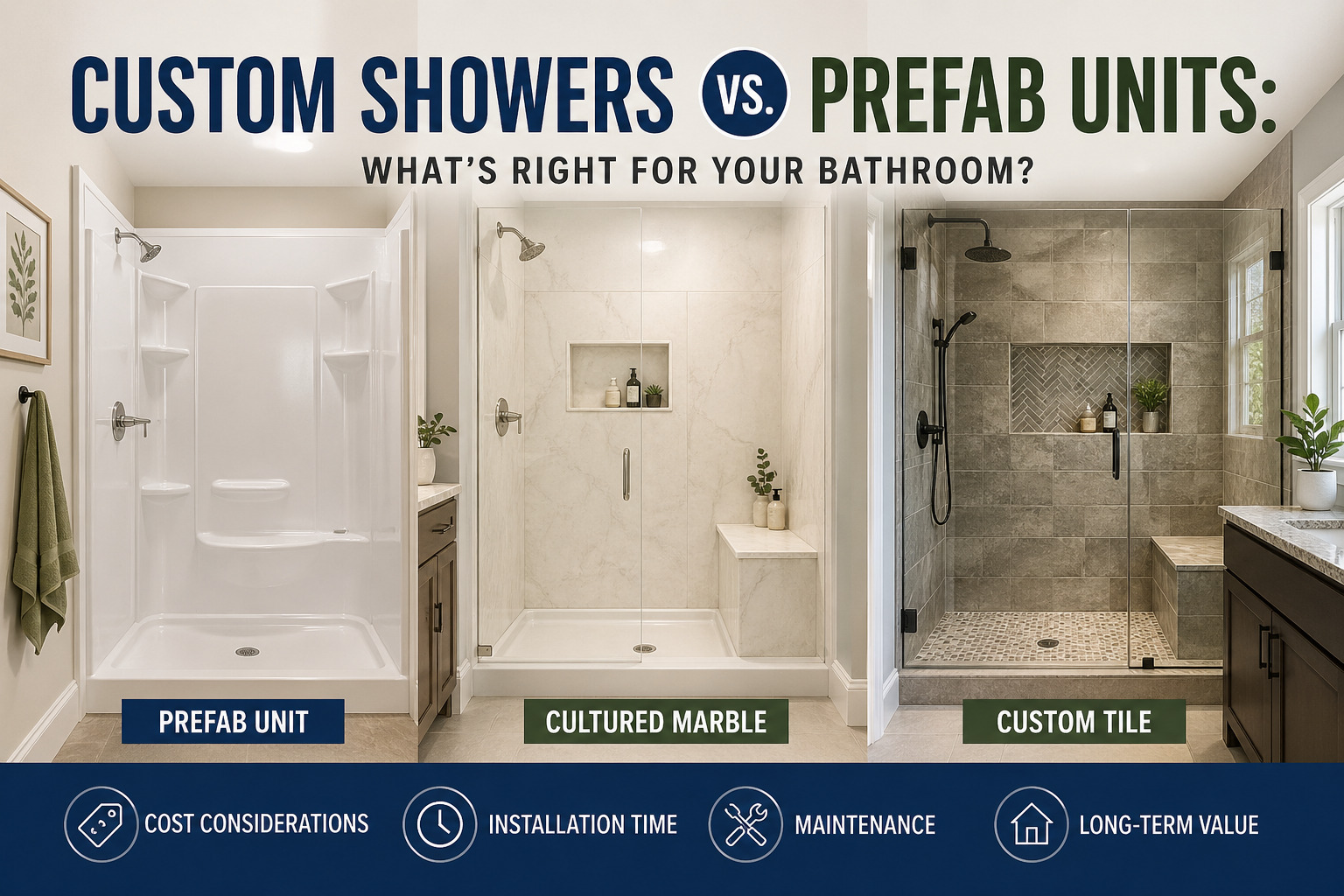
When planning a remodel, one of the first major decisions is the type of shower. Most homeowners choose between three main options: a prefabricated (prefab) shower, a cultured marble shower, or a custom tile shower.
At first, many people focus on price. That makes sense. But the lowest upfront cost does not always lead to the best long-term result. Some options cost less at the start but require more maintenance or replacement later.
This article explains the key differences between these three types of showers. The goal is to help you choose what works best for your home, your budget, and how you plan to use the space.
If you are starting to plan your project, it also helps to see how your shower fits into a full bathroom remodeling in Waterloo and the Metro East project, where layout, materials, and long-term use all come together.
Key Takeaways
- There is no one-size-fits-all shower option. The right choice depends on your budget, how you use the space, and how long you plan to stay in your home.
- Prefab showers are the most affordable upfront, but they offer limited design options and may not last as long as other choices.
- Cultured marble provides a strong balance of durability, clean appearance, and low maintenance, making it a practical option for many homeowners.
- Tile showers offer the most design flexibility, but they require a higher investment, longer installation time, and ongoing maintenance.
- Maintenance matters over time. Prefab may wear sooner, tile requires regular upkeep, and cultured marble is the easiest to maintain.
- Installation quality is critical, especially with tile showers. Proper waterproofing and skilled work make a big difference in long-term performance.
- Upfront cost does not equal long-term value. A lower initial price can lead to higher costs later if the shower needs repairs or replacement.
- Buyer perception varies by material. Tile can stand out, cultured marble looks clean and updated, and prefab is often seen as more basic.
- Think beyond the shower itself. Your choice should fit the overall bathroom layout and how the space will be used daily.
- A well-planned decision leads to better results. Choosing based on long-term performance, not just price, helps avoid frustration later.
II. Understanding the Three Main Shower Options
Before comparing the pros and cons, it helps to understand what each type of shower is and how it is built. While they may look similar at first, the differences behind the surface have a big impact over time.
A. Prefabricated (Prefab) Shower Units
Prefab showers are made in a factory and delivered ready to install. They usually come as one large piece or a few sections that are assembled in your bathroom.
Most are made from fiberglass or acrylic and built in standard sizes. This helps keep costs down and speeds up installation.
Because they are simple and efficient, prefab showers are often used in new homes, rental properties, or basic remodels.
B. Cultured Marble Showers
Cultured marble is a man-made material created by mixing crushed stone with resin and sealing it with a smooth outer layer.
These showers are made to fit your specific space. The panels and base are cut to size, which allows for a more precise fit and a more finished look.
This option is popular with homeowners who want a clean, updated appearance without the upkeep that comes with grout. With over 200 bathroom projects completed, this type of system has shown consistent performance when installed properly.
C. Custom Tile Showers
Tile showers are built on-site. The process starts with a waterproof system, followed by the installation of tile.
You can choose from a wide range of materials, colors, and layouts. You can also include features like shelves, benches, and custom shapes.
Because of this flexibility, tile showers are often used when design and layout matter most.
III. Key Differences at a Glance
Each option has clear strengths and trade-offs.
Prefab showers are quick to install and cost less upfront, but they offer limited design options and may not last as long.
Cultured marble provides a custom fit, a clean look, and low maintenance without the added complexity of tile.
Tile showers offer the most design flexibility and a more custom appearance, but they take longer to build, cost more, and require more upkeep.
Looking at each option more closely helps show how these differences affect daily use.
IV. Prefab Shower Units: Pros and Limitations
Prefab showers are often the starting point because they are widely available and simple to install.
Their biggest advantage is cost. They provide a functional solution with a lower upfront investment, which can be helpful for tighter budgets.
Installation is also faster. Since the unit is already built, it can often be installed in just a few days. This reduces disruption in your home.
However, there are trade-offs.
Prefab units come in standard sizes, which can be limiting. In bathrooms with unique layouts, the fit may not be ideal. This can lead to wasted space or awkward layouts.
Their appearance is another factor. Prefab showers tend to look more basic and do not add much to the overall design.
Multi-piece units include seams. Over time, these seams can wear or collect moisture.
They also tend to show wear sooner. Scratches, stains, and general aging are more noticeable compared to other options.
For these reasons, prefab showers are often best for situations where cost and speed matter most.
V. Cultured Marble Showers: Balanced Performance and Value
Cultured marble offers a middle ground between prefab and tile.
One of its biggest advantages is the custom fit. Because each panel is made for the space, the result feels more complete and intentional.
Another benefit is the smooth surface. Large panels reduce seams, which lowers the risk of leaks and removes the need for grout.
Without grout lines, cleaning becomes much easier. There is no need for sealing or detailed scrubbing.
Cultured marble also holds up well with daily use, making it a practical choice for many households.
There are still some limitations.
Design options are more limited than tile. While there are different colors and patterns, the overall look remains fairly consistent.
It also costs more upfront than prefab.
Even with those factors, cultured marble works well for homeowners who want a balance between appearance, durability, and ease of maintenance.
VI. Custom Tile Showers: Maximum Flexibility with Higher Commitment
Tile showers offer the most control over the final result.
You can choose the layout, materials, and features. This allows you to create a space that fits your style and your home.
Features like built-in shelves or benches can be added during the build. This level of customization makes tile a popular choice for larger or more detailed remodels.
When finished, tile can give the bathroom a more custom look.
At the same time, this option requires more time and effort.
Tile showers take longer to build because each step must be completed carefully. This includes waterproofing, tile installation, and finishing work.
The cost is also higher due to the labor involved.
Maintenance is another consideration. Grout lines need regular cleaning, and some materials may require sealing.
One of the most important parts of a tile shower is the waterproofing behind the tile. If this step is not done correctly, problems can develop later.
This is why experience matters. A properly built tile shower can last a long time, but the installation must be done right.
If your project includes changing your layout, it helps to see how showers fit into larger projects like home additions in the Metro East.
VII. Maintenance and Long-Term Durability
Over time, each shower type performs differently.
Prefab showers are easy to clean at first but tend to show wear sooner. Scratches and discoloration can become noticeable.
Cultured marble is easier to maintain long-term. With no grout lines, cleaning stays simple and consistent.
Tile showers require the most upkeep. Keeping grout clean takes regular effort, but with proper care, tile can last a long time.
After several years, the differences become more clear. Prefab often shows wear first. Tile can still look good but requires more work. Cultured marble tends to stay more consistent with less effort.
VIII. Design Flexibility and Aesthetic Impact
The design of your shower affects how your bathroom feels as a whole.
Prefab showers are simple and functional but do not add much visual impact.
Cultured marble offers a clean, finished look that feels more updated.
Tile provides the most flexibility. It allows you to match the rest of the bathroom and create a more custom space.
If you are deciding where to invest, comparing bathroom remodels vs. other home upgrades can help put these choices into context.
IX. Cost Considerations: Upfront vs. Long-Term Value
Cost is always part of the decision, but it helps to look beyond the starting price.
Prefab showers cost less upfront but may need to be replaced sooner.
Cultured marble costs more initially but lasts longer and requires less maintenance.
Tile has the highest upfront cost but can add strong design value.
Looking at how long each option lasts—and what it takes to maintain it—gives a better sense of overall value.
X. Resale Impact and Buyer Perception
Bathrooms influence how buyers see a home, and the shower plays a role in that.
Prefab showers are often seen as basic and may not add much value.
Cultured marble presents as clean and updated, which appeals to many buyers.
Tile showers can stand out when done well.
Quality matters more than the material itself. A well-built shower will perform better and present better over time.
XI. How to Choose the Right Option for Your Home
The right choice depends on your priorities.
If budget and speed matter most, prefab may be the best fit.
If you want durability and low maintenance, cultured marble is often a strong option.
If design flexibility is the priority, tile may be the better choice.
It also helps to consider how long you plan to stay in your home and how much maintenance you want to handle.
XII. Conclusion: Focus on Fit, Not Just Price
There is no single option that works best for every home. Each type of shower—prefab, cultured marble, and tile—has its place depending on your goals and how you plan to use the space.
Prefab showers work well when speed and cost are the main priorities. Cultured marble offers a balance of durability, clean appearance, and low maintenance. Tile provides the most flexibility but requires more time, cost, and upkeep.
The best choice comes from looking at the full picture, not just the upfront price.
Thinking about updating your bathroom this year? Get a free estimate from Bryce Toenjes Construction or call 618-363-5165 to learn more about our bathroom remodeling services in Waterloo and the Metro East.
Frequently Asked Questions
1. What is the difference between a prefab shower and a custom shower?
A prefab shower is made in a factory and installed in your home as a complete unit or in sections. A custom shower, like tile or cultured marble, is built or fitted specifically for your space. Custom options allow for better fit and more design control, while prefab focuses on speed and lower upfront cost.
2. Is a prefab shower a good long-term option?
Prefab showers can work well in certain situations, especially when budget and speed are the main concerns. However, they typically do not last as long as other options and may show wear sooner with regular use.
3. Are cultured marble showers better than tile?
They are not necessarily better—just different. Cultured marble is easier to maintain because it has no grout lines and fewer seams. Tile offers more design flexibility and a more custom look but requires more upkeep. The better option depends on your priorities.
4. Which type of shower is easiest to clean?
Cultured marble is usually the easiest to clean because it has smooth panels and no grout lines. Tile showers require more cleaning due to grout, and prefab showers are simple at first but can become harder to keep looking new over time.
5. How long does each type of shower last?
Prefab showers tend to have the shortest lifespan
Cultured marble offers strong durability with proper care
Tile showers can last a long time if built correctly and maintained
The quality of installation plays a big role in how long any shower will last.
6. Do tile showers always increase home value?
Tile showers can improve how a bathroom is viewed, especially when they are well-designed and properly built. However, poor installation or outdated design can have the opposite effect. Quality matters more than the material itself.
7. Is a custom shower worth the extra cost?6. Do tile showers always increase home value?
For many homeowners, it is. A custom shower can improve daily use, fit the space better, and last longer. The value depends on how long you plan to stay in your home and what level of finish you want.
8. How long does it take to install each type of shower?
Prefab showers are usually the fastest and can often be installed in a few days
Cultured marble takes longer due to custom fitting
Tile showers take the longest because they are built step-by-step
The full project timeline also depends on the scope of the bathroom remodel.
9. What problems can happen with tile showers?
Most issues come from poor installation, especially with waterproofing. If the system behind the tile is not done correctly, it can lead to leaks or damage over time. Proper installation is critical.
10. How do I choose the right shower for my bathroom?
Start by thinking about your budget, how long you plan to stay in your home, and how much maintenance you want to handle. Then consider how important design and customization are to you. Each option has trade-offs, so the right choice depends on your goals.
11. Can I mix different materials in my bathroom remodel?
Yes, many homeowners combine materials. For example, you might choose a cultured marble shower with tile flooring or accents. The key is making sure the overall design works together and fits your space.
12. Should I replace my shower during a bathroom remodel?
In most cases, yes. Updating the shower during a remodel helps ensure everything works together and avoids having to redo part of the bathroom later. It also allows for better layout and design decisions.
This article is a collaboration between Bryce Toenjes Construction and OpenAI’s ChatGPT. Created on April 05, 2026, it combines AI-generated draft material with Bryce Toenjes’s expert revision and oversight, ensuring accuracy and relevance while addressing any AI limitations.
Recommended Reading:
1. “Tile vs. Solid Surface Shower Walls: Which Is Best for Your Bathroom?”
This article from the National Kitchen & Bath Association (NKBA) offers a professional comparison of tile and solid surface systems, including performance, maintenance, and installation considerations—making it highly relevant for evaluating cultured marble versus tile.
URL:https://nkba.org/news/tile-vs-solid-surface-shower-walls/
2. “Acrylic vs. Fiberglass Showers: What’s the Difference?”
Published by Bob Vila, this piece provides a detailed breakdown of common prefab materials, helping professionals better understand durability, cost drivers, and long-term performance differences in factory-built units.
URL:https://www.bobvila.com/articles/acrylic-vs-fiberglass-shower/
3. “The Ultimate Guide to Building a Tile Shower”
This guide from Fine Homebuilding walks through proper tile shower construction, with a strong focus on waterproofing systems and installation best practices—key factors that directly impact long-term success in custom showers.
URL:https://www.finehomebuilding.com/project-guides/tiling/the-ultimate-guide-to-building-a-tile-shower

